The problem
Ferrow moves freight between forty cities for regional shippers. Its planners ran the day from a spreadsheet and three phone lines, and its drivers closed each stop on a paper form that reached the office two days later.
By the time anyone knew a load was late, the customer had already called.
What we built
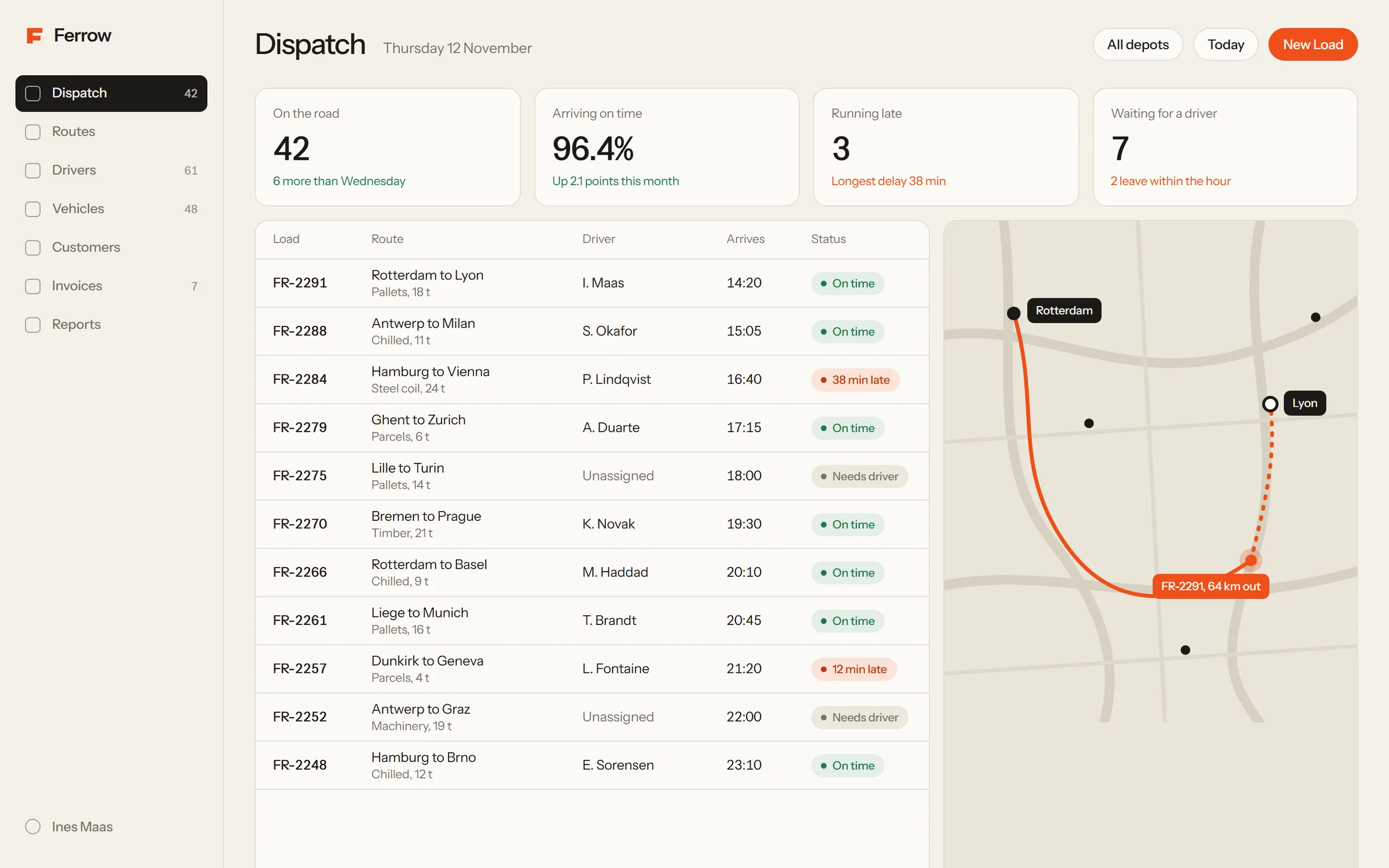
- One screen for the day. Every load, its driver and its arrival time sit in one table beside the map, sorted by what needs attention first.
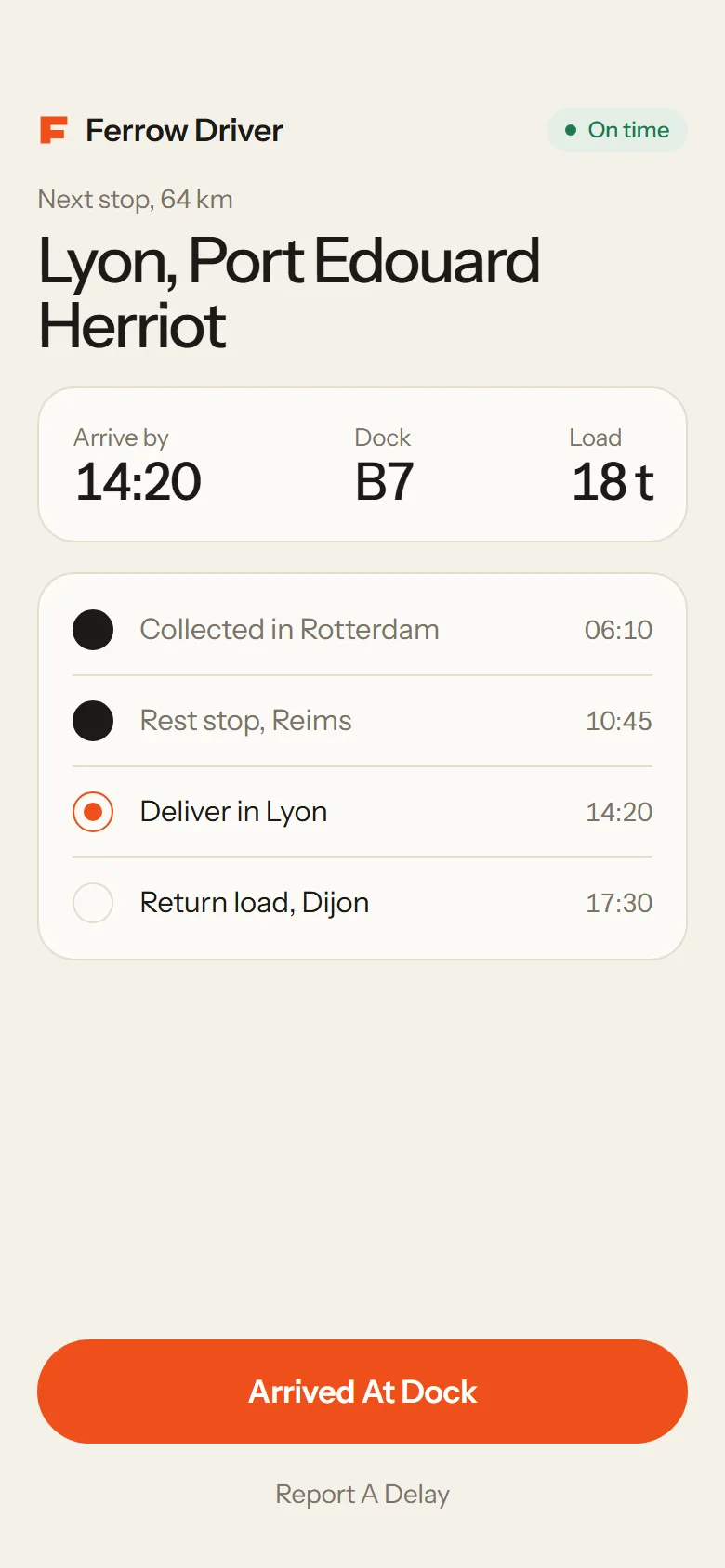
- A driver app with one job per screen. The next stop, the dock and the time are all a driver sees, and finishing a stop takes two taps.
- Delays that announce themselves. A load that slips more than ten minutes tells the planner and the customer at the same moment.
A planner should hear about a late load from the screen, never from the customer.
How it went
We spent the first week in the dispatch room in Rotterdam and two days in a cab. The first release went to one depot in week fourteen, with a planner sitting next to an engineer. The other two depots followed a month later, and the paper forms were gone by the end of the quarter.